Ordering Ongoing Effects - The Layer System
Sometimes there will be several ongoing effects and the game must apply them in the proper order.
Remember the Golden Rule! This system is somewhat complex, but is intended to provide intuitive results. You can probably ignore this whole section simply do what's intuitive, and you'll get the right result.
If you really want to dive into the nitty-gritty details of some complicated interactions, follow this guide. To determine the correct application of ongoing effects: 1) Group effects by layer. 2) Within each group, arrange effects by timestamp, oldest to newest.
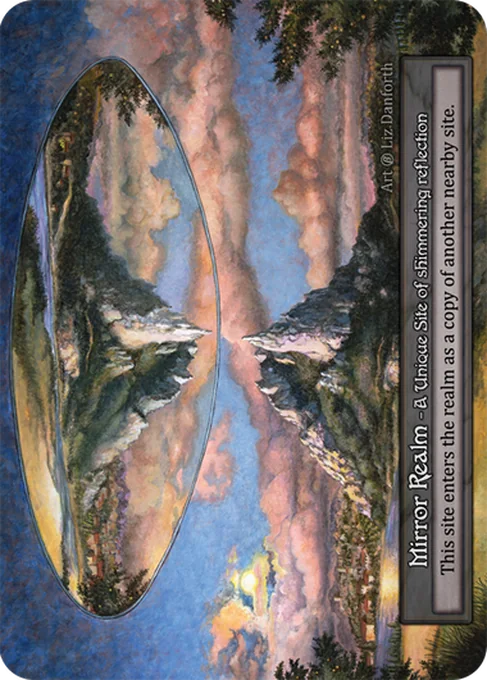
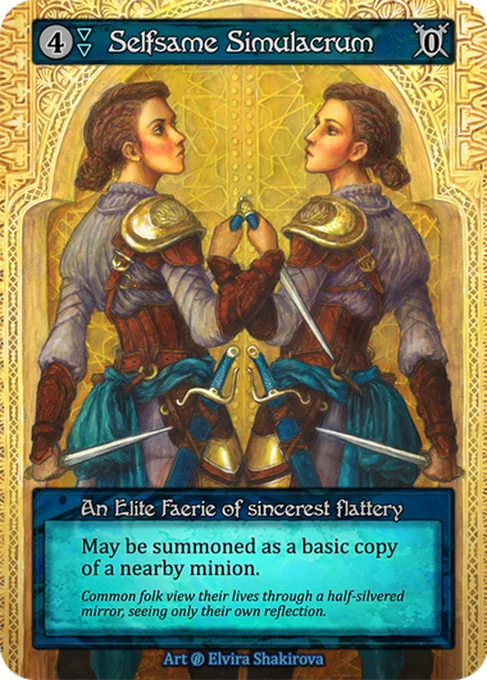
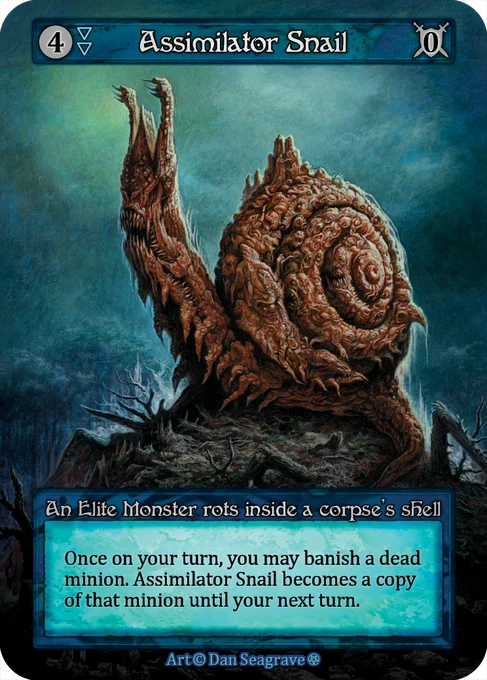
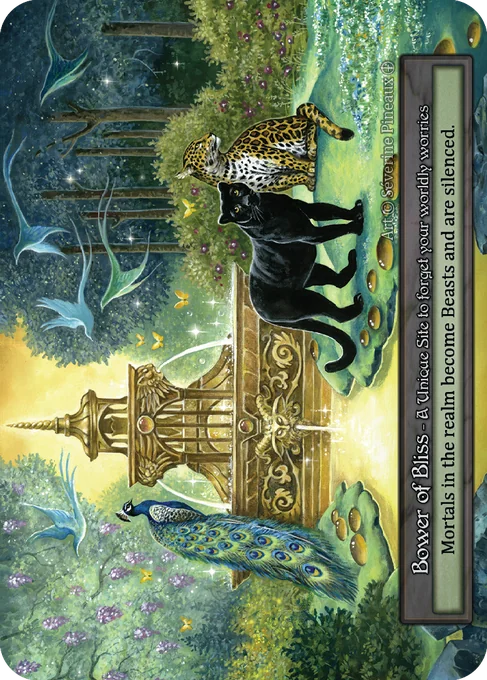
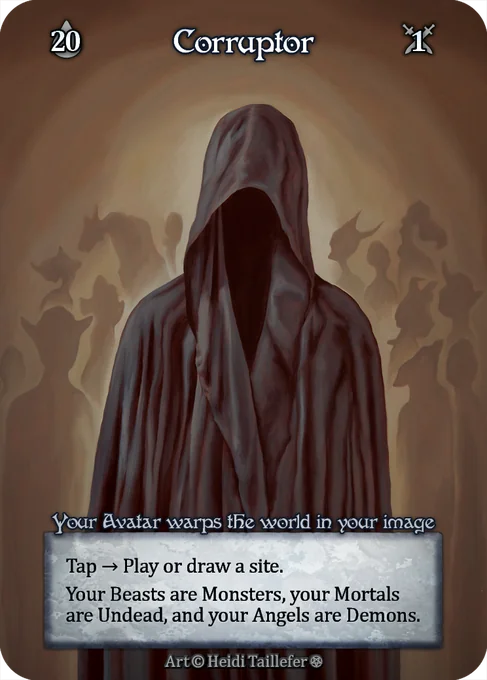
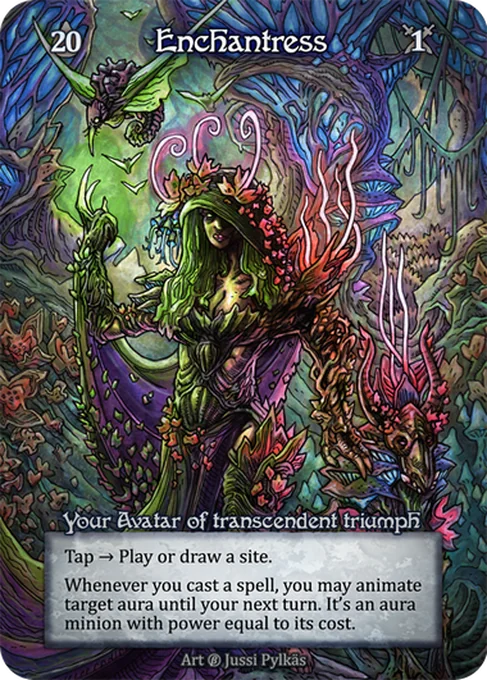
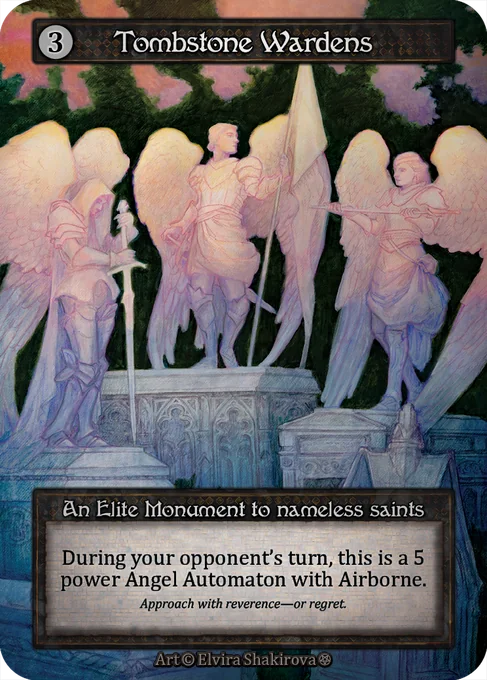
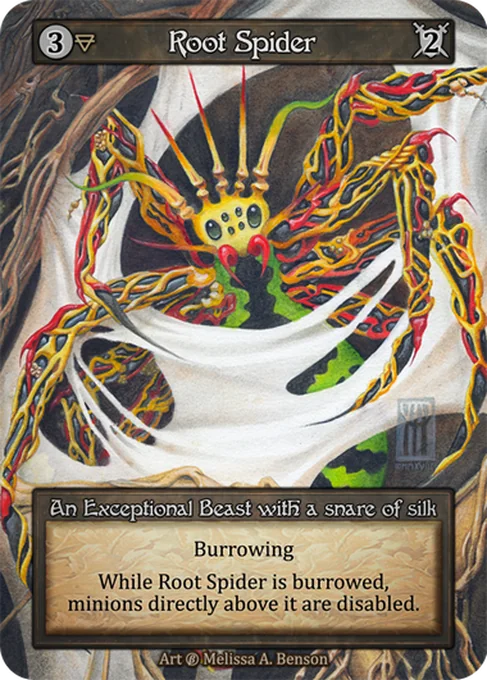
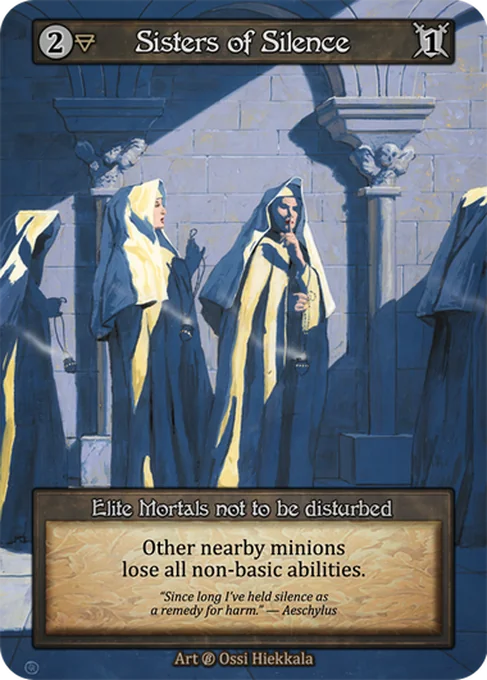
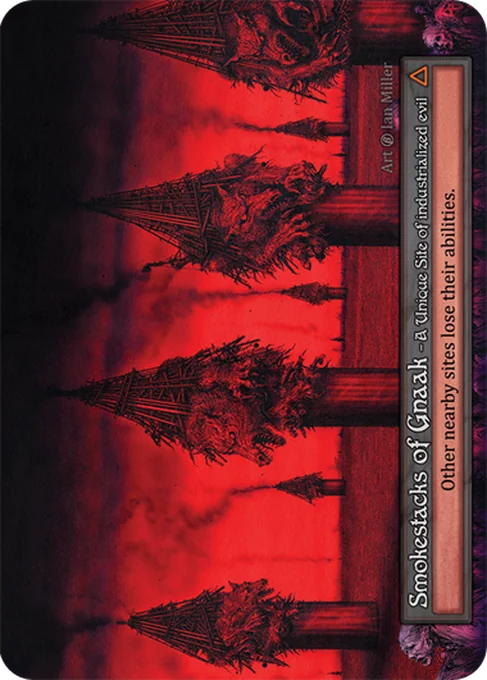
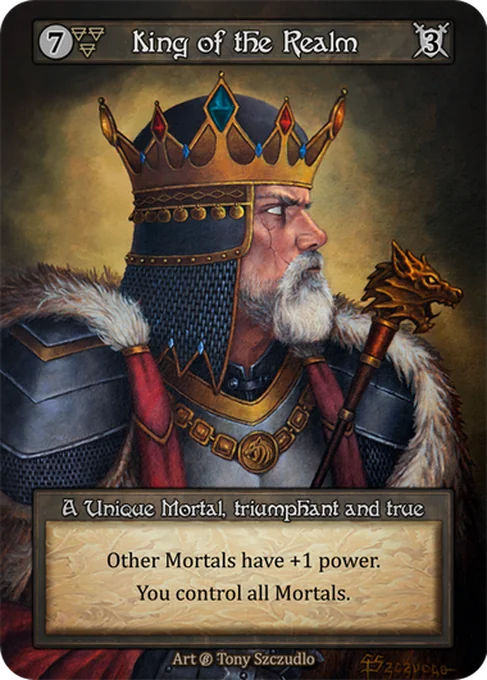
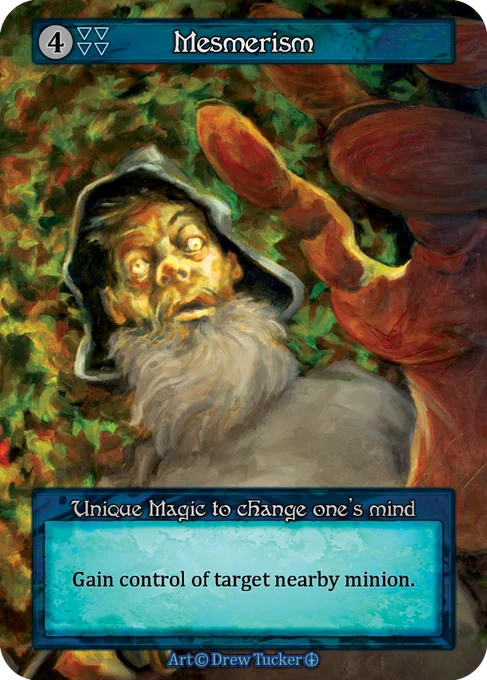
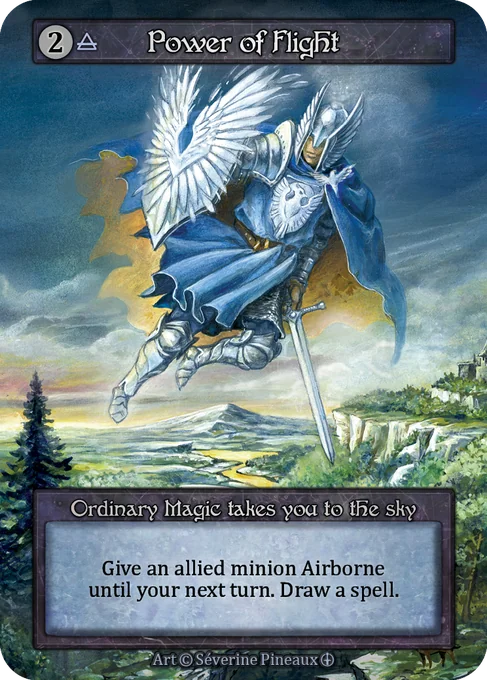
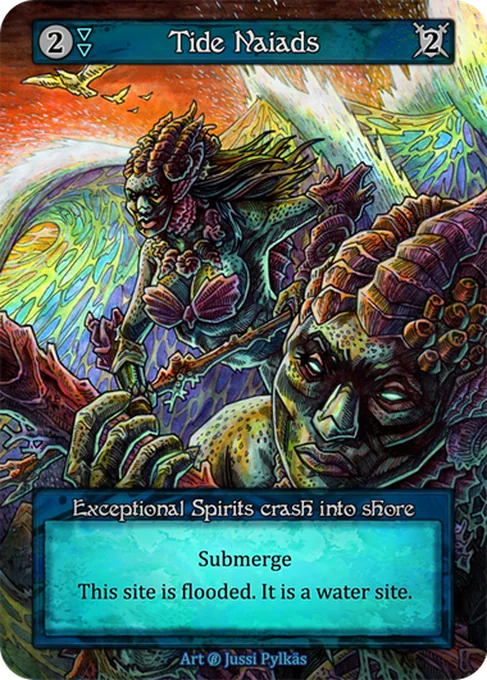
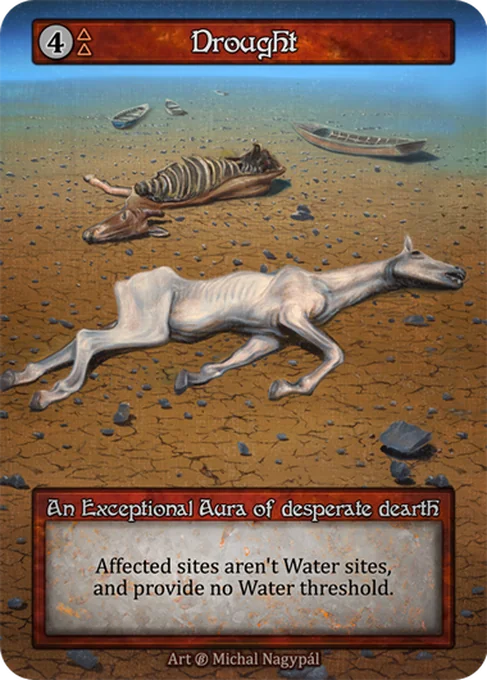
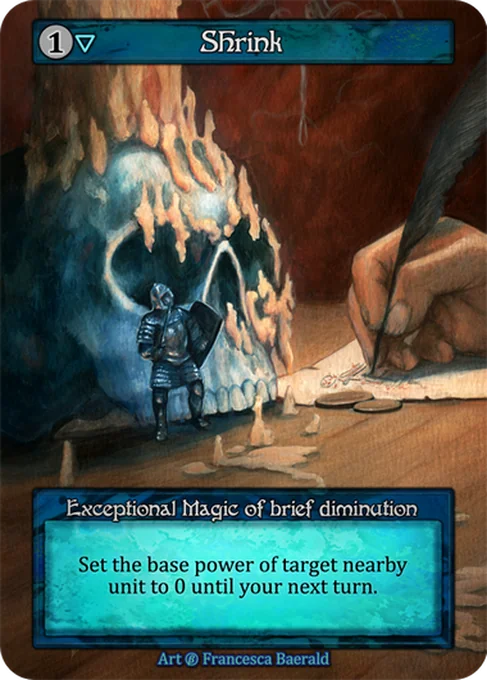
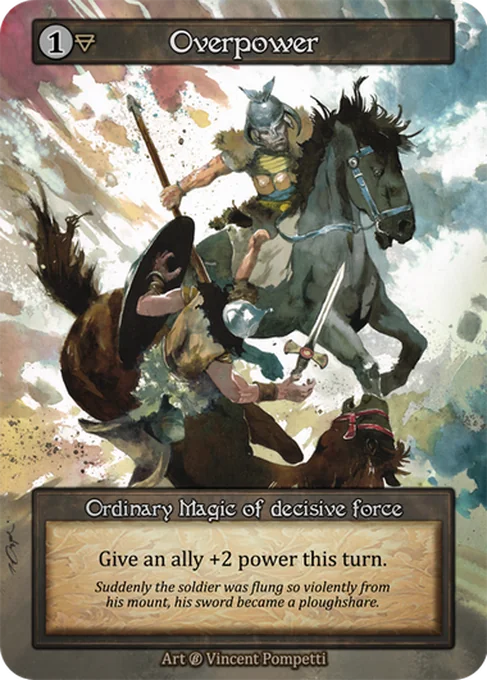
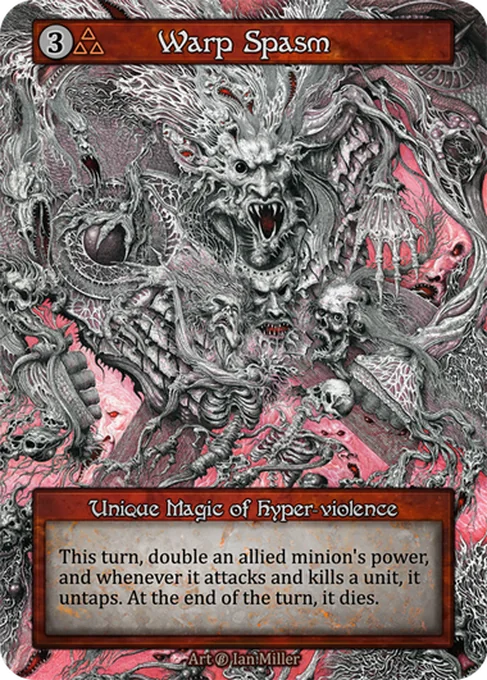
3) Rearrange effects based on their conditions, if needed. Layer Order First, group ongoing effects by layer: Copy effects, e.g. Mirror Realm, Selfsame Simulacrum, Assimilator Snail Type and sub-type changing effects, e.g. Bower of Bliss, Corruptor, Enchantress, Tombstone Wardens Ability Removing effects, including Disabling effects, silencing effects, e.g. Root Spider, Sisters of Silence, Watchtower, Smokestacks of Gnaak Control effects, e.g. King of the Realm, Mesmerism Ability adding effects, and affinity changing effects, e.g. Power of Flight, Tide Naiads, Drought Power Modification effects Setting effects, e.g. Shrink Then, addition and subtraction effects, e.g. Overpower Then multiplication effects, e.g. Warp Spasm Timestamp Order Then, within each layer (or between layers), arrange effects based on timestamp, oldest to newest. For ongoing effects generated by a passive ability (e.g. King of the Realm, Root Spider), their timestamp is when the card entered the realm.
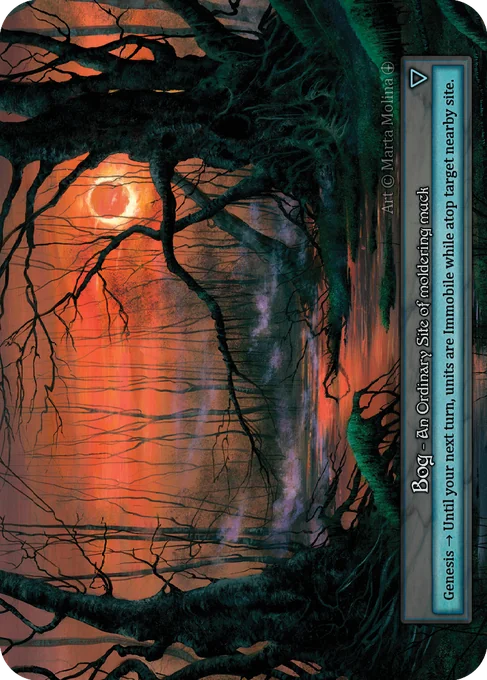
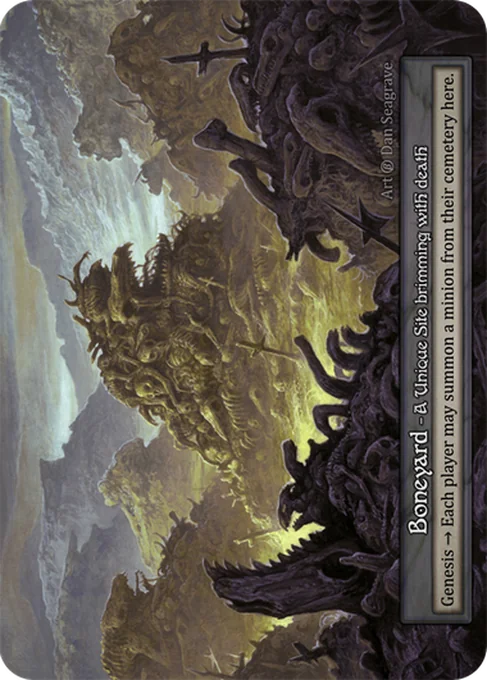
For ongoing effects generated by an activated or triggered ability (e.g. Floodplain, Bog), their timestamp is when the ability was activated or triggered, not when the original source entered the realm. In the unlikely event that two or more cards enter the realm simultaneously and they have passive abilities that may need to be ordered (e.g. my King of the Realm and yours, entering simultaneously via Boneyard), the active player's cards are considered to have entered first (in the order of their choosing, if they have more than one entering simultaneously). Adding and Removing Abilities Out of Order Finally, you may have to rearrange certain effects that have conditions, as follows: If an effect would add an ability, or remove an ability, it does so before that ability's layer.
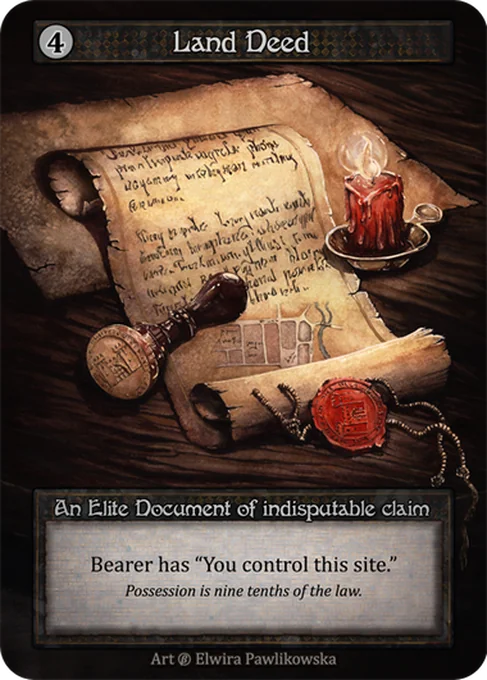
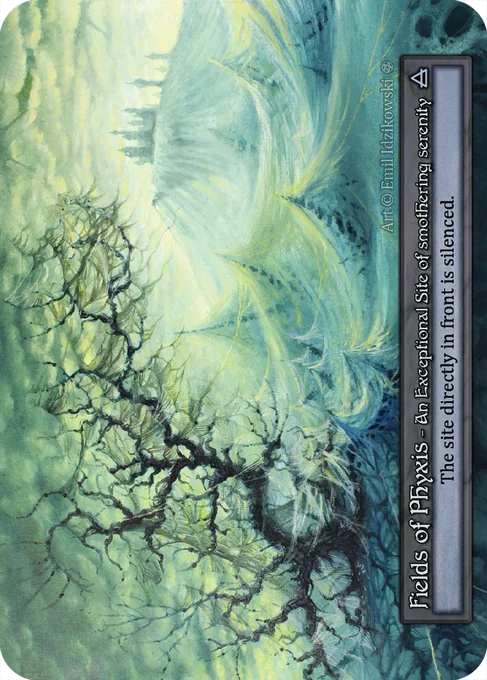
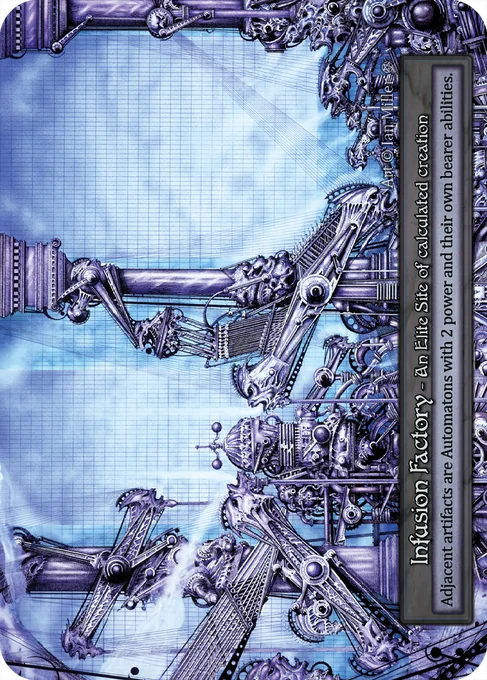
For example, you have a minion holding a Land Deed. Since Land Deed adds a control ability to the bearer, it will be applied just before layer 4 (Control), rather than in layer 5 (Ability Adding). As another example, you have a Fields of Phyxis with an Infusion Factory in front of it.
Because the Fields would remove a type-changing ability, it will be applied just before layer 2 (Type and Sub-Type Changing), rather than in layer 3 (Ability Removing). If two abilities would try to remove each other, use timestamp order. If an ongoing effect has a condition, first apply effects related to that condition, and only then check the condition.
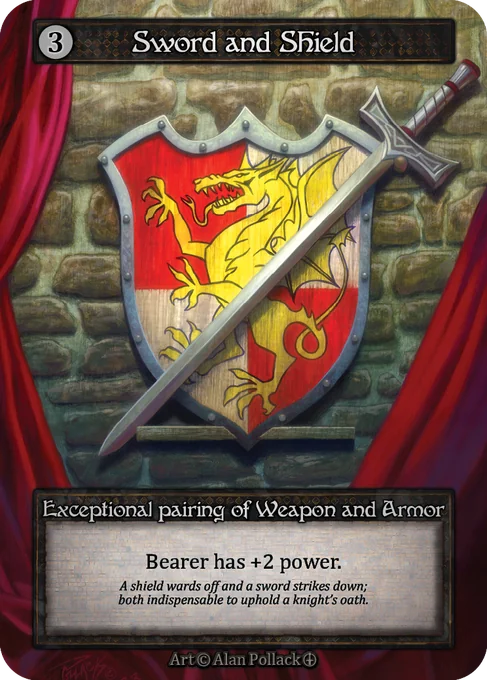
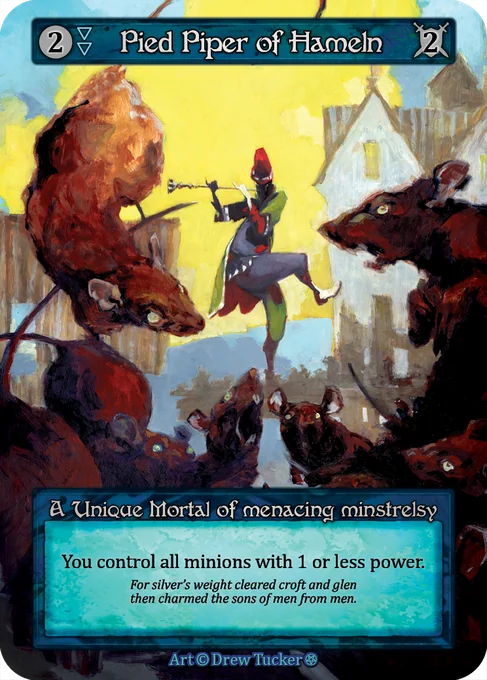
For example, you have a Foot Soldier holding a Sword and Shield and your opponent has Pied Piper of Hameln. Because Pied Piper's ability is conditional on the minion's power, wait to check Pied Piper's condition until just after layer 6 (Power Modification). The Foot Soldier's power will be 1+2=3, so you keep control of your Foot Soldier.
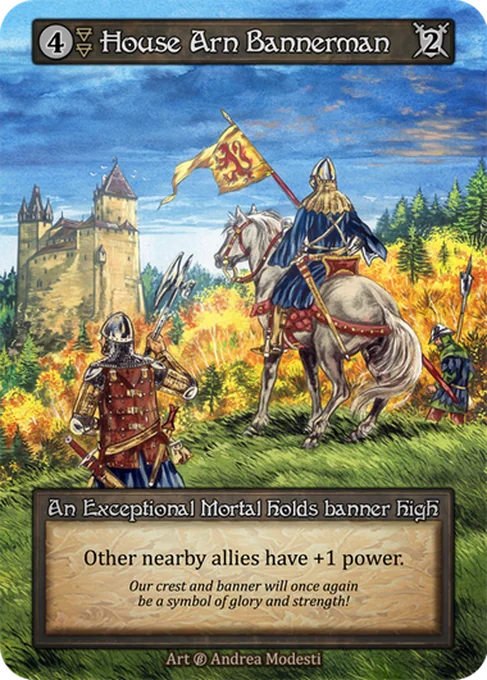
Another Pied Piper example: You have Pied Piper and House Arn Bannerman. I have a Skeleton token. Pied Piper's ability is conditional on minion power, so we wait to apply it until after layer 6, after your House Arn Bannerman's ability has been applied.
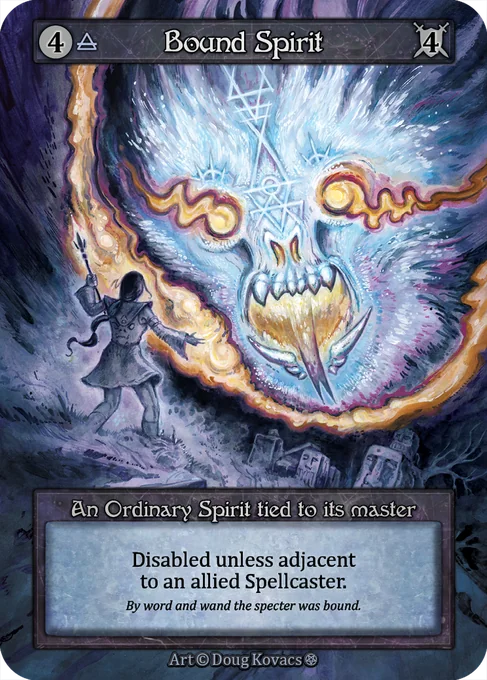
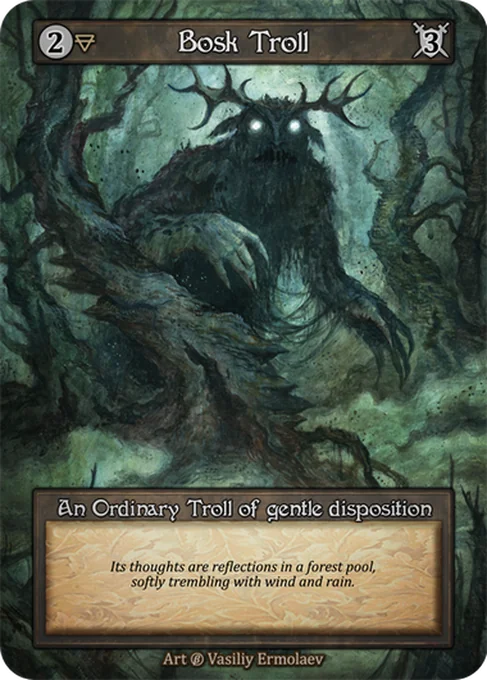
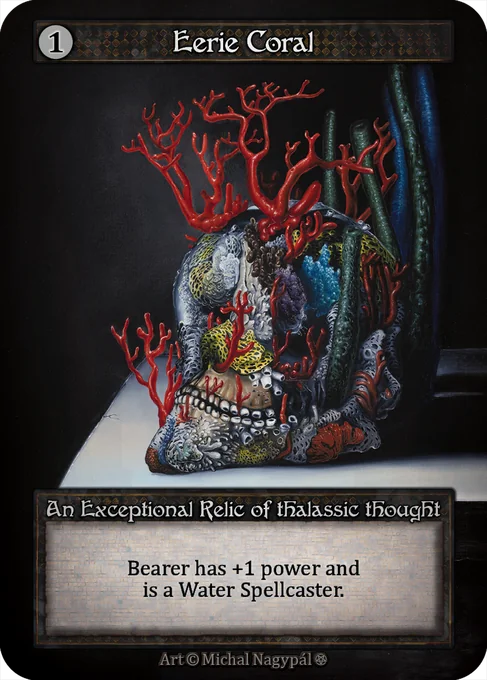
You gain control of my Skeleton after layer 6, but it stays at 1 power, since you didn't control it when House Arn Banner's ability was applied. As another example, you have a Bound Spirit adjacent to a Bosk Troll holding an Eerie Coral. The Spirit's ability is conditional on being adjacent to an allied Spellcaster.
The Troll gains the Spellcaster ability from the Coral in layer 5 (Ability Adding). Wait to check Spirit's ability until just after layer 5. In fact, a Bound Spirit holding an Eerie Coral could un-disable itself.
An effect cannot remove itself once it's already being applied.
For example, an animated Silence aura will cause itself to lose its abilities in layer 2, but losing that ability will not remove the silence effect, which was already being applied.
To ensure all control effects match player intuition, we need a 'dependency' rule.
Note that these cases are handled nicely already by the timestamp rule: Two Kings of the Realm (apply in timestamp order) Two Mesmerisms (apply in timestamp order) But, if you play King of the Realm and then I play Mesmerism on your King, we cannot simply use the timestamp rule! If we did, your King would take control of all mortals, then my Mesmerism would take control of your King... but not the other mortals, since that effect was already applied! Such an outcome doesn't match design intent nor player intuition, so we need a 'dependency' rule for cases like this.
In such cases, apply the independent effect first (e.g. Mesmerism), then apply any dependent effects (e.g. King of the Realm), ignoring normal timestamp order. In summary, do the intuitive thing and it will be correct!
There are some minions (e.g. Hillock Basilisk and Stone-gaze Gorgons) with an ability that disables other minions 'at rest.' For the most part, these abilities can be applied in normal timestamp order along with other similar abilities in layer 3 (Ability Removing effects).
However, when two minions with this type of ability are trying to apply to one another, you first determine which would 'win' the initial check (i.e. the one which is not at rest). That minion is then considered to have an earlier timestamp than the other for as long as that other minion is at rest. If both minions are at rest at the time you are applying these abilities, rely on normal timestamp order.
If you play King of the Realm and then I play King of the Realm afterward, the game applies both control effects in layer 4. Since your King is older, the game starts with that effect. Your King gives you control of all mortals, including my King.
Then, when the second King's ability is being applied, he's already controlled by you due to the first King's ability.
Therefore, you control all mortals and the first King 'wins.'
If you play Smokestacks of Gnaak and then I play another Smokestacks of Gnaak nearby, the game tries to apply both lose-ability effects in layer 3. Since your Smokestacks are older, the game starts with that effect. Your Smokestacks causes my Smokestacks to lose its ability.
Then, when my Smokestacks ability would be applied, it already lost its ability due to the first Smokestacks.
Therefore, the first Smokestacks 'wins.'
If you play Flood and then I play Drought, the game tries to apply both affinity changing effects in layer 5. Since you played Flood first, the game first gives the affected sites a minimum of one water affinity (W). Then, when my Drought ability is applied, the affected sites have no water affinity.
Therefore, the Drought 'wins.' If Flood had been played second, then the Flood effect would have been applied second, and thus would 'win.' Remember that if an activated or triggered ability creates an ongoing effect, the timestamp is when the ability activated or triggered, not when the original source entered the realm.
For example, Floodplain's activated ability would 'win' against a Drought even if the Floodplain entered the realm before Drought, as long as the Floodplain's activated ability was used after Drought.
You control a Foot Soldier carrying a Pallid Bust. The Bust banished a Sisters of Silence. The Foot Soldier with Bust are standing in Acid Rain.
We start with the Pallid Bust itself. Normally, granting abilities happens in layer 5.
However, it's trying to grant a silence ability to the bearer (layer 3) and types (layer 2), so it actually applies in layer 2. Acid Rain is a silence effect (layer 3). But in this case, it's removing the type-changing effect of the bust (layer 2), so it actually applies just before layer 2.
The end result is that Acid Rain silences the Bust and the Foot Soldiers don't gain types or abilities of the Sisters. Hopefully that matches player intuition from just glancing at the cards!
This is not an exhaustive list of cards with conditional ongoing effects, but highlights the most notable specimens: Bound Spirit Disable is normally layer 3, but this waits until after layer 5 (Ability adding). Pied Piper of Hameln Control is normally layer 4, but this waits until after layer 6 (Power modification) Plate of the Whale Adding Immobile is normally layer 5, but this waits until after layer 6 (Power modification) King of the Realm or Returned King Control is normally layer 4. Subtype changing happens in layer 2.
So, these apply in layer 4 normally, since effects related to their condition have already been applied by the time we get to layer 4.